Define staff routes before placing access points
Mark the director position, stage wings, green room, control booths and passages where staff must remain in conversation while moving. Prioritize them by production role. A position that the stage manager visits shortly before doors open may be more important than a large open area where teams do not take cues. For each route state who walks it, when and what instructions they must send or receive. Ask lighting, stage and sound staff to confirm the list before testing.
A floor plan may differ from the working venue. Record where temporary LED walls, metal frames, equipment cases and partitions can appear. Note doors that remain open during build and closed during the show. A beltpack worn behind the operator's body may behave differently from a device sitting at the centre of a room. Record plausible carrying position and the normal conditions that the survey is designed to represent.
Test in motion, not only at static positions
Choose a temporary access point placement consistent with the equipment instructions and intended installation. Begin with one person fixed and another on a crew route talking continuously. Where the crew needs to travel both ways, repeat the route in both directions. At the first interruption, mark an identifiable point on the map. Record whether speech clips, how it returns and whether the operator needs to intervene. Calls from a series of stationary points can miss interruptions between them.
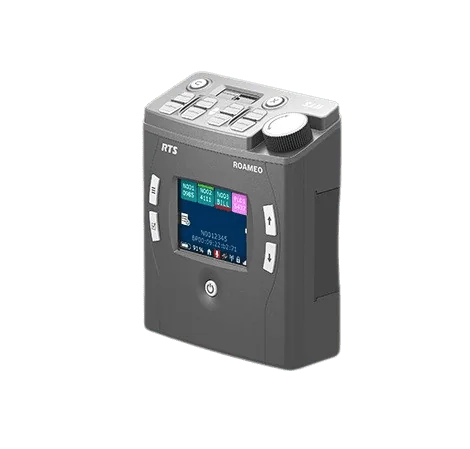
Where the system provides a survey application, record its indicators as defined by the manufacturer. The RTS ROAMEO guide, for example, discusses signal strength and a quality figure as inputs to a survey. These readings help compare positions under matching conditions. Ask the person on the other end what they actually heard as well. If the displayed value looks adequate but speech clips at a transition, keep both observations and investigate the route and configuration.
Distinguish edge coverage from roaming performance
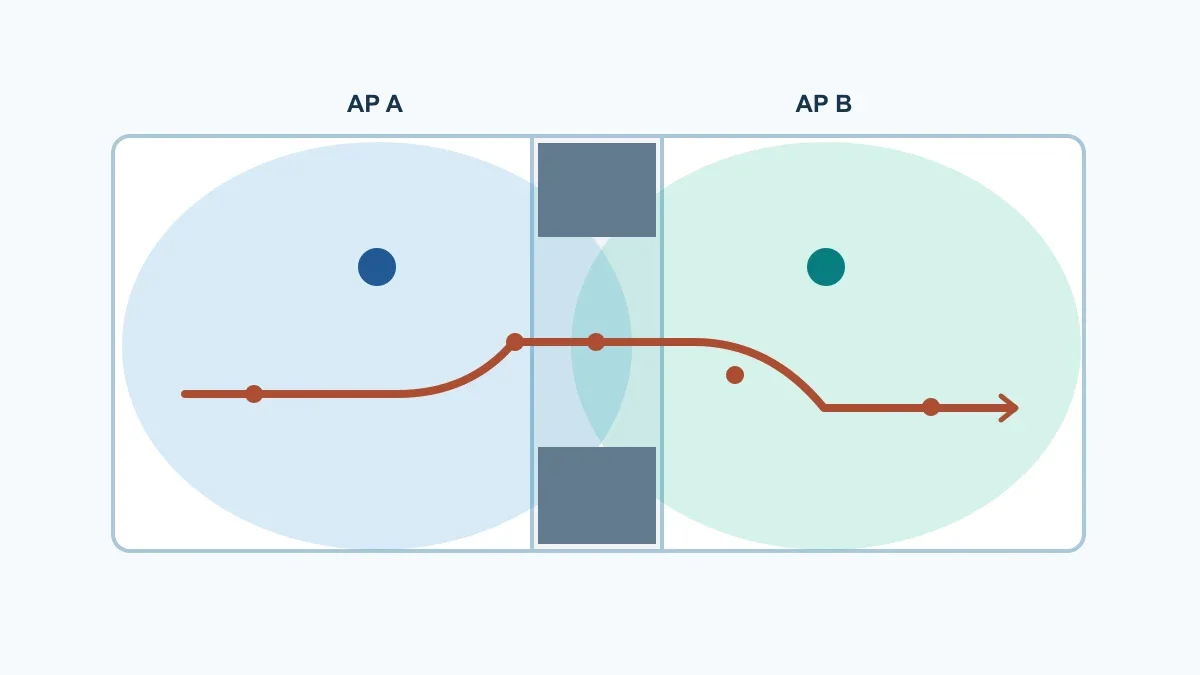
Static coverage describes whether a beltpack works at a location. Roaming concerns continuity while moving between access points in a system designed for it. Test the overlap around adjacent operating areas before deciding that two individually strong locations cover the connecting path. Write down the starting position, the transition point, any interruption and whether the call recovers without manual action.
A corridor that turns behind a wall or crosses a lift lobby can produce a sudden change. Include a stop before the door, a call during closing and the return walk. Focus on routes used during the event. If overlap is poor, review another access point position, additional infrastructure or a change to the operational route with the integrator. Retest the same sequence after each change so observations are comparable.
Check load, infrastructure and regional fit
Account for where users concentrate, especially near a stage entrance or production desk. Check the exact system limits for registered and simultaneous users and for the intended usage at each access point. Test while multiple crews are already using the intercom. Record which roles need frequent talk, how many people gather for a cue and whether beltpack swaps between shifts briefly increase the load.
Keep an infrastructure list for network drops, approved power, cable constraints, safe access and mounting requirements. Identify who will confirm the regional version and the applicable local requirements for the equipment. In Israel, the Ministry of Communications publishes information on conformity and equipment approval. Ask the supplier for model-specific evidence rather than treating the DECT label as proof that any version is suitable in any country.
Worked route example from a backstage survey
An empty venue is tested from production control to the stage wing. The operator hears and replies all along the corridor. Temporary scenery is then installed and closes part of the opening. A new test finds that the ends still work but the voice cuts out at the corner. The crew repeats the walk from the same starting point, marks the interruption and records what changed. This supports a review of placement and transition coverage instead of relying on a strong reading at one of the endpoints.
After an adjustment, test again with the intended active users, the event door positions and equipment where it will actually sit. Use a short instruction and clear response while walking between coverage areas. The acceptance result is whether stage crew can hear and reply along the named route under the agreed conditions. Record the position and equipment revision so that later scenery changes can trigger a focused retest.
Handover, battery changes and operational fallback
Deliver a map of installed access points, working areas, transitions and any place that requires a different practice. Record the configuration, user count used in testing and what audible performance was required. Check whether all crew can recognize their group and can replace a beltpack without losing a critical channel. Identify the charging positions and the person who checks batteries before each main production window.
Make the response to an interrupting fault clear. A wired position or a separate intercom path can support the show if it is already tested and staff know when to use it. Review whether access points share a power source or switch and whether an apparent fallback depends on the same item. If temporary operation is needed, describe how the director announces the change and confirms that key roles returned to the normal group afterwards.
Give each route entry a reproducible result
Record start and end points, the beltpack identity, the access point where that is visible, conditions and an audible outcome from the far end. Mark known-good positions for a focused retest on show day. Compare like indicators within the same system and do not substitute a radio figure for documented intelligibility.
Questions about professional DECT surveys
How many access points does a venue need?
The answer depends on working routes, obstacles, required overlap and the supported user load. Use a venue survey to estimate real placements rather than counting only floor area.
Is a morning survey enough for an evening event?
It provides a baseline. Repeat the important routes with scenery and equipment installed and under conditions representative of the actual show.
How should a short roaming interruption be documented?
Identify the marked route and direction, note what part of the sentence was lost and whether the call returned without intervention. Repeat the reverse route and check whether another approved beltpack shows the same behaviour.