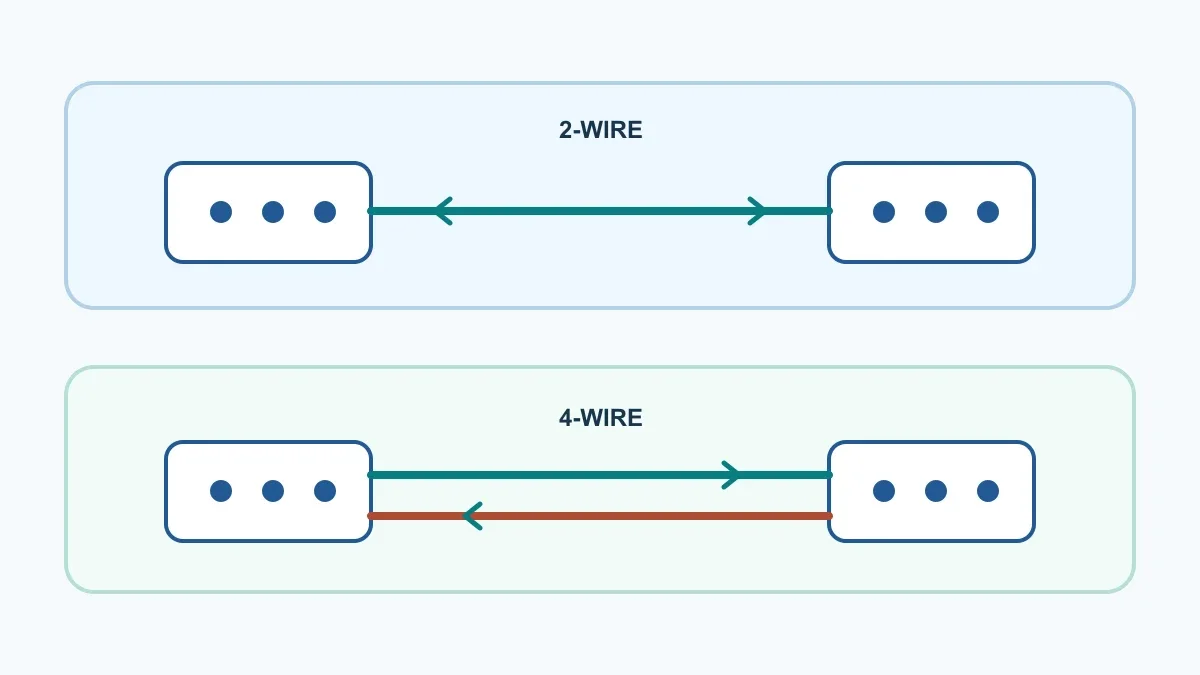
What two-wire and four-wire describe
On an analogue two-wire intercom connection, talking and listening share an electrical audio path. The circuit can still support conversation in both directions at once. A four-wire connection has separate send and receive paths. These terms describe the electrical arrangement, not a universal connector pin count. Depending on the system, the connection may also supply power or carry a call indication. Check the exact models, mode, termination and pin assignment at each end before mating equipment.
Distinguish the conversation group from the connector. A partyline gives a group of authorized participants a common channel. It may be implemented as analogue partyline, digital partyline or a group inside a matrix. Map who must talk and who must listen first. Then check how the installed equipment can support each needed group, point-to-point conversation and listen-only requirement, and what functions survive a handoff between systems.
Inventory the installed system before ordering an interface
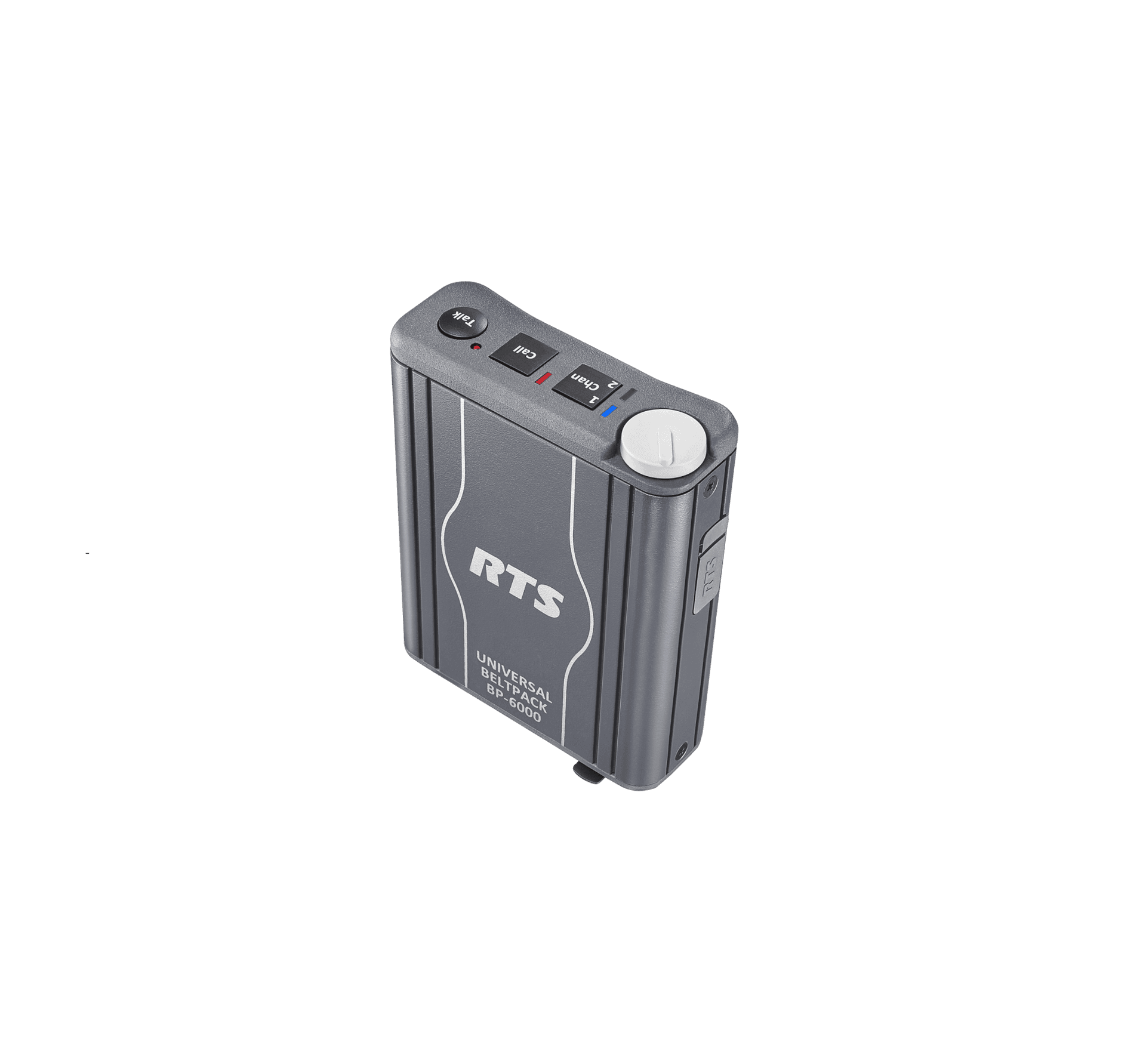
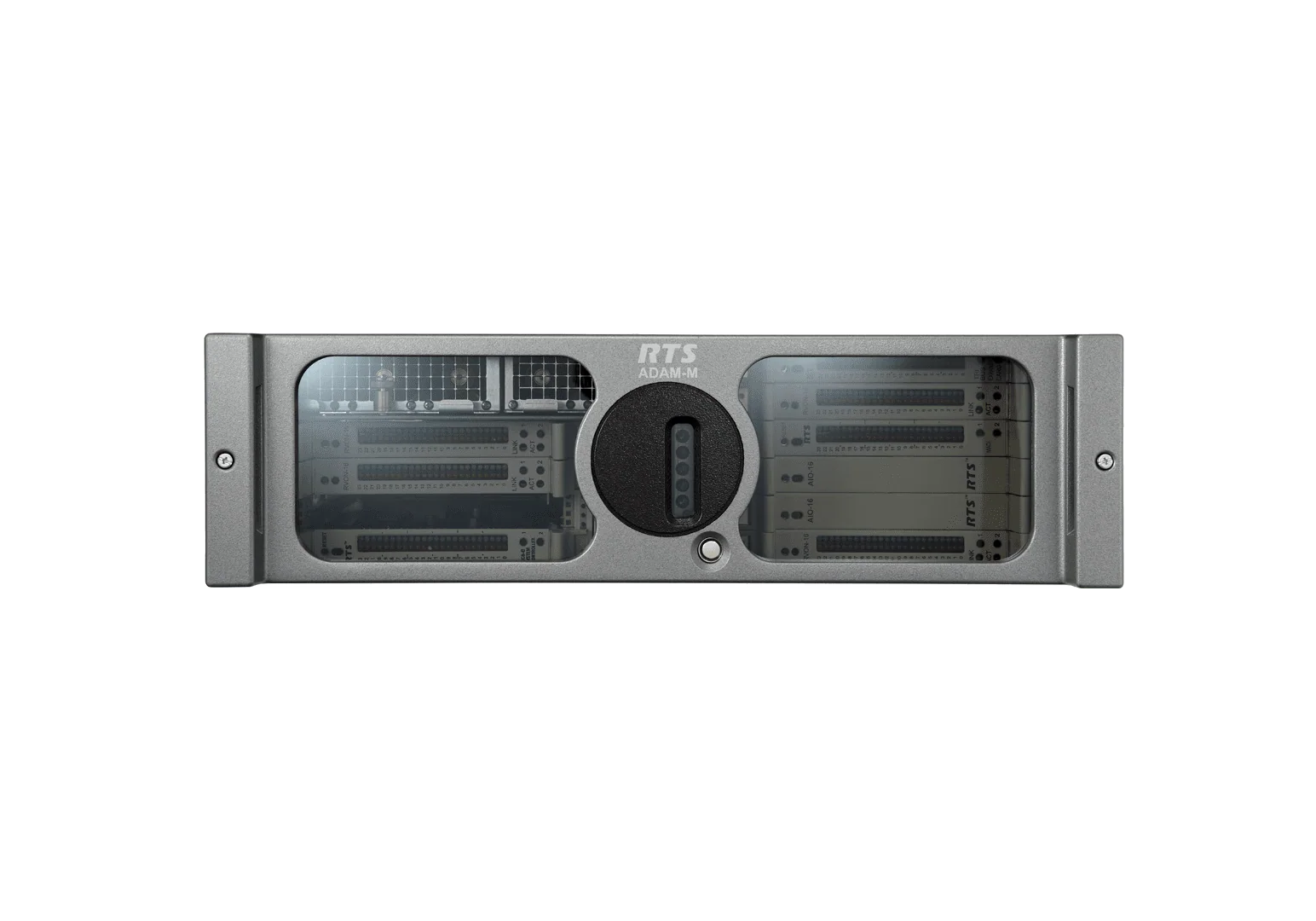
List the main station, beltpacks, line power supplies, any radio interface, connection hardware, matrix input and external audio sources. For each link describe the sound and control features needed in both directions. List call lights, line power and control separately from voice. Mark reserved or backup lines so they are not counted as already available capacity on the wrong side.
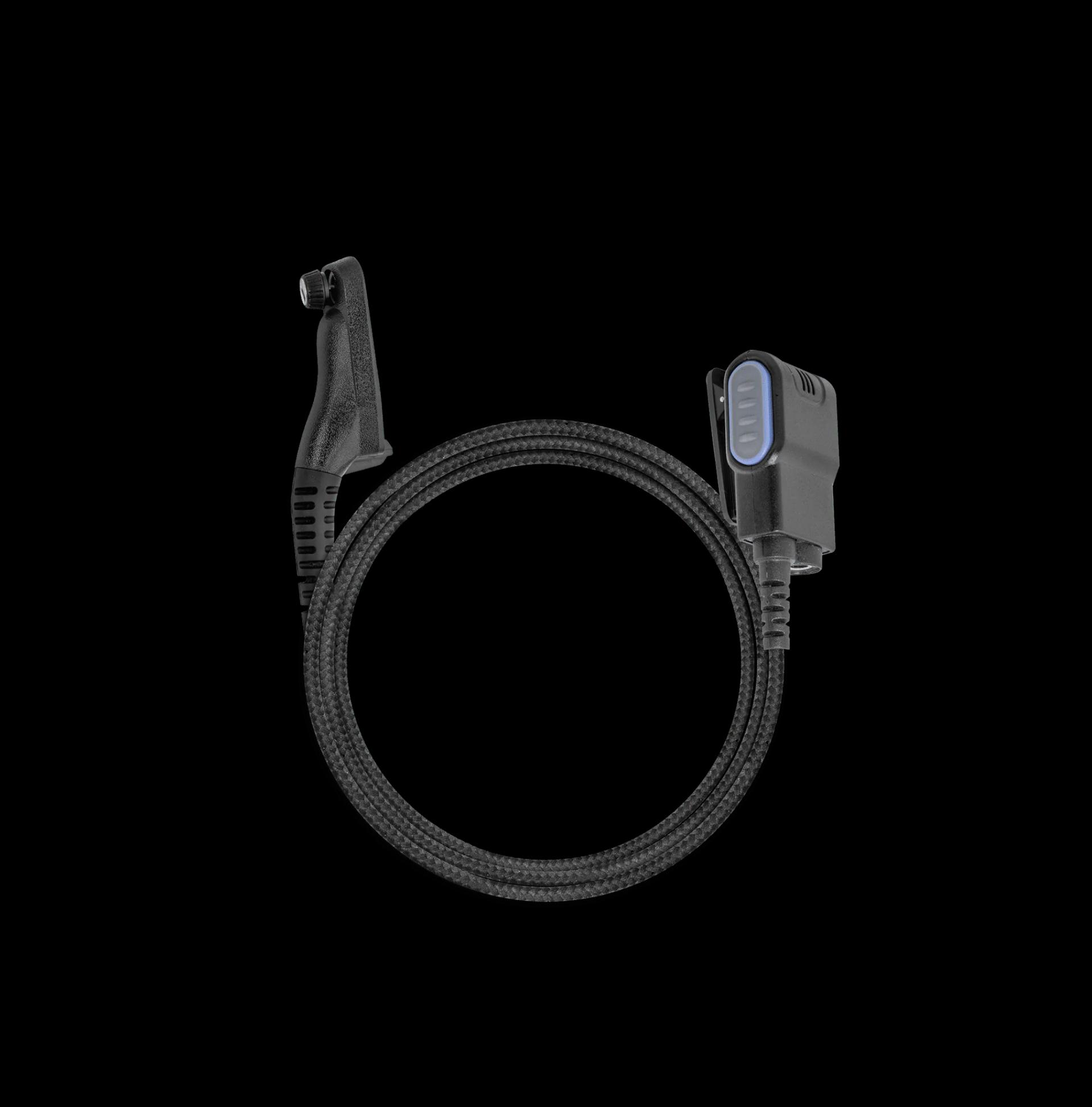
Describe how the production changes between rehearsal and show. Include the largest number of beltpacks and the points that change when the venue connects temporary equipment. This helps identify expected loading and whether the same interface needs to support groups independently. Similar XLR and modular connectors can be used for different electrical arrangements. Cross-check a data sheet for the exact module, not only the number of channels visible on the main station.
What a hybrid does between two-wire and four-wire
A compatible hybrid separates the common voice path into send and receive on the four-wire side. During commissioning, check how much of the outgoing voice returns through the shared path. Nulling is the process used to reduce unwanted return in the documented configuration. Some equipment offers an automatic routine and others require the documented adjustment procedure. Use the specific model instructions and have the interface commissioned by a qualified technician.
Identify the device that supplies line power and confirm the documented termination arrangement. Changes to line power or termination can affect all devices on a branch. If call signaling needs to cross the hybrid, verify the supported format and any required option. A useful voice conversation alone does not prove that a call lamp, station identity or system mute survived the interface.
Record send and receive as distinct routes
Keep a source and destination for each direction on the four-wire side. For example, the stage group feeds a production channel and receives cues from the director. If the same side also carries programme audio, check that it only reaches the intended users and does not create a duplicate return. Ask the integrator to record who listens by default, who must press a key and what happens when another group starts talking at the same time.
This planning makes troubleshooting one-way audio easier. A failed return can be the result of a listen assignment, a mismatched input level or a physical interface error. Run comparisons from a beltpack, a director's panel and the external equipment that must participate. Preserve a map of port names and cable references. The production team can use it both when swapping a unit and during a later expansion.
Example from a venue joining an existing partyline to a matrix
Suppose the lighting team keeps its analogue beltpacks while the director works from a matrix panel. The lighting team needs to receive a countdown and speak back without being placed on the camera circuit. Start with a routing plan and give the technician the exact type of partyline and supported pin assignment from the manufacturer. Define the group in the matrix and preserve the approved line power on the analogue branch. Before plugging in every beltpack, test one group with the director speaking, the lighting position replying and briefly overlapping messages.
Repeat the trial at the working station count before the show. Listen for echo, an unexpected route into another group and changes in listening level. If the crew relies on a call lamp, a user at each end should report what appears and what happens on reply. Where an outside production company adds another system, repeat the identification of line type, power ownership and routing. The familiar connector shape does not establish those design decisions.
Acceptance, fallback and handover
Test from both endpoints under normal working conditions. Ask one person in each role to make a brief call and then repeat an instruction received from the other side. Test the return path independently. Include any required call signaling. Record the key name and whether its setting is momentary or latched. At practical rehearsal volume, a usable route is intelligible without an unexpected level jump or return of the talker's own voice.
Define what happens if the interface becomes unavailable during a show. A documented fallback group or an approved spare patch can preserve crucial calls if the crew knows how to use it and the capacity has been tested. Save the configuration, the verified routing, an equipment list and the agreed test date. After a change in line load, power, interface firmware or cable route, arrange the relevant comparisons again before the next event.
Keep a one-page handover for the person covering a shift. Include who may change routing, a known working headset or beltpack and who confirms that the rest of the crew can hear after the change. Planned acceptance is easier to repeat across shows when the expected sender, recipient and observed result are written together.
Questions about analogue intercom connections
Can I connect two devices if both have XLR ports?
Compare the standards, pins, levels and any voltage at the port in the documentation for both models. Apparent mechanical fit does not confirm an electrical match.
Does every beltpack need a separate hybrid?
One compatible hybrid may link a whole analogue partyline to the matrix. The number needed depends on the separate channels required, line loading and available interface options.
Why can one side speak but not hear a reply?
Check the assigned talk and listen paths, the direction and compatibility of the connection and the gain setup. Repeat the test from each end separately and compare the result with the routing plan.